
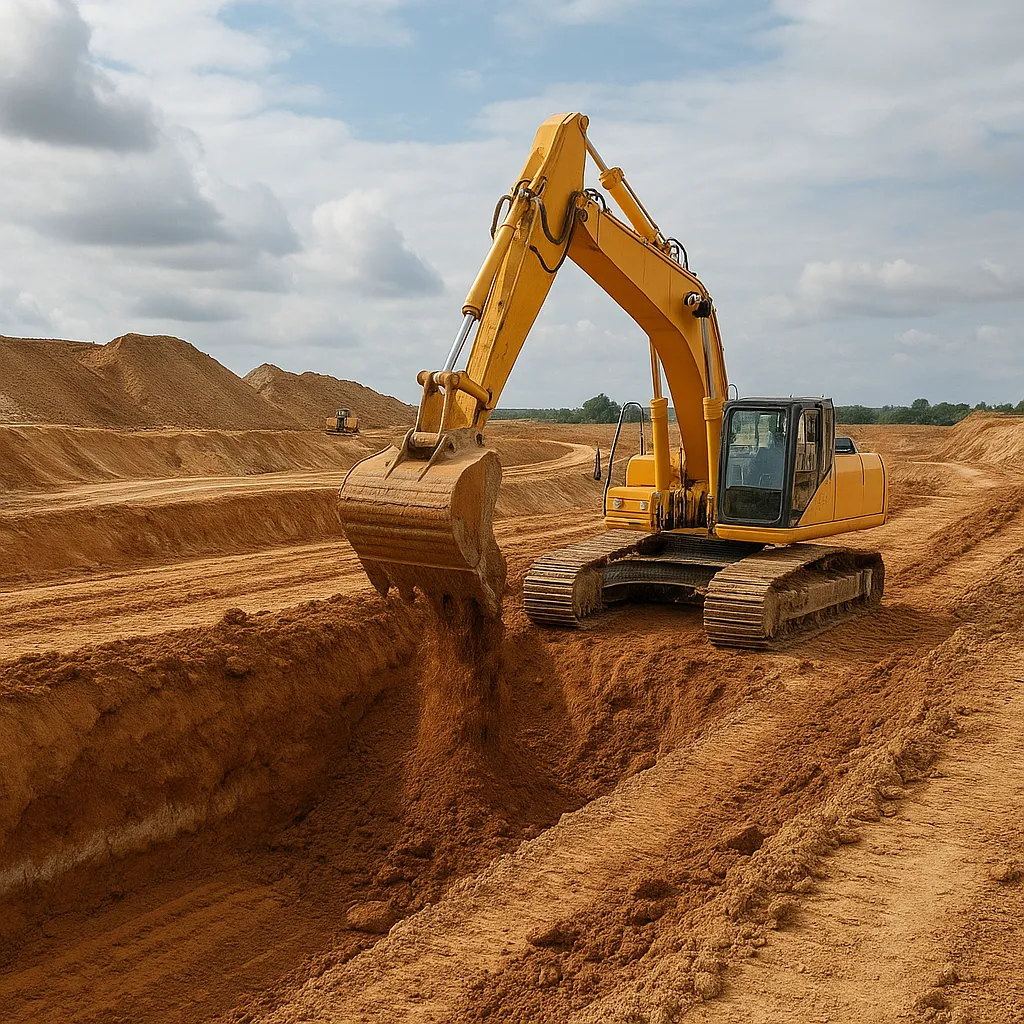
How to Excavate a Construction Site: A Step-by-Step Safety Guide
Excavating a construction site is not simply a matter of bringing in an excavator and removing soil. Safe work begins with understanding the ground, the design, underground services, nearby structures, water conditions and the people who will enter or work beside the excavation. This guide explains the main stages of a controlled excavation project and highlights why competent supervision and local rules matter from the first survey to final backfilling.
1. Define the purpose and excavation limits
Begin with the approved drawings and a clear statement of what the excavation must achieve. It may be required for building foundations, a basement, drainage, utility installation, road construction, landscaping or a retaining structure. Each purpose affects depth, width, access, batter angles, temporary support and the sequence of work. The site team should identify the excavation footprint, design levels, formation level, working space, spoil-storage area, haul routes and any areas that must remain undisturbed.
Check the most recent drawings and specifications before setting out. Confirm dimensions, benchmarks, datum levels, tolerances and the location of existing structures. If drawings conflict, stop and obtain clarification from the designer or engineer rather than making an assumption on site. Excavation can remove support from nearby foundations or affect roads, boundary walls and buried services, so a design review is particularly important where work is close to existing assets.
2. Complete surveys, permits and pre-start planning
Review land ownership, planning conditions, environmental restrictions, local authority requirements and any permit-to-dig system used by the principal contractor. Depending on the country, site, depth and purpose, approvals may be needed for road opening, drainage connections, groundwater discharge, contaminated soil handling, tree protection or work near protected habitats. A project in the United States must follow the applicable OSHA construction requirements; work in the United Kingdom is governed by relevant health and safety law and the Construction (Design and Management) Regulations. Do not assume one country’s rules apply everywhere.
Arrange a site investigation appropriate to the project. Existing geotechnical reports may describe soil layers, groundwater, fill, rock, bearing conditions and contamination, but their age and coverage should be checked. A new investigation may be needed where the proposed excavation is deeper, conditions vary or the design has changed. The engineer should determine whether monitoring, dewatering, temporary works or specialist support is required. This planning stage connects closely with construction labour-cost estimating, because safe sequencing, plant time, inspections and temporary works must be included in the budget rather than treated as surprises.
3. Locate underground utilities before digging
Underground services are a major excavation risk. Water pipes, gas mains, electricity cables, fibre-optic lines, drainage systems and other assets may not be shown accurately on old plans. Obtain utility records, use the required local locating service and arrange site detection using suitable equipment. In the United States, the 811 service is commonly used to request marking of participating buried utilities before digging. Other countries have their own notification systems and legal procedures.
Never rely on a single map or paint mark as a guarantee of exact depth and alignment. Use a trained locator where required, brief the team on the marked routes and establish an exclusion zone. In areas where services may cross the excavation, expose them carefully using an approved safe-dig method. Mechanical excavation should not proceed blindly around a suspected gas or electrical service. If an unrecorded line is discovered, stop work, keep people away and contact the responsible utility owner and site management.
4. Assess the soil and groundwater conditions
Soil can behave differently over short distances and can change after rain, vibration, drying, freezing or nearby loading. A competent person should assess soil type, layering, previous disturbance, fissures, water ingress and the stability of the excavation. Loose fill, sand, saturated soil and previously excavated ground may require more conservative protective measures than stable cohesive soil. A visual appearance alone is not enough to determine whether a trench is safe to enter.
Groundwater can soften the base, erode sidewalls, cause piping or create uplift pressure. A dewatering plan should specify how water will be collected, pumped, treated if necessary and discharged lawfully. Pumping can affect nearby structures or cause settlement, so the engineer may need to assess off-site effects. Keep surface runoff away from the excavation using suitable drainage and diversion measures. If water enters unexpectedly, reassess the stability before anyone enters.
5. Set out the excavation and prepare the work area
A qualified surveyor or authorised setting-out technician should mark the limits, alignment, levels and key reference points. Protect survey pegs and benchmarks from plant movement. Establish clear barriers, warning signs, lighting, pedestrian routes and traffic management. Keep unauthorised people away from the excavation and separate pedestrians from reversing vehicles. Plant operators need clear instructions and, where visibility is restricted, a trained banksman or spotter.
Before excavation starts, confirm the plant selection and access arrangements. An excavator, backhoe, bulldozer, trenching machine or vacuum excavation unit may be suitable depending on the soil, scale and service constraints. Check operator competence, lifting attachments, guards, alarms, tracks, brakes and daily inspection records. Keep heavy equipment and spoil piles back from the edge by a distance determined by the design and site conditions. Edge loading can increase the risk of collapse even when the excavation appears stable.
6. Excavate in a controlled sequence
Follow the approved method statement and design levels. Remove vegetation, topsoil and unsuitable material separately where the specification requires reuse or disposal. Excavate in layers or stages that allow the ground to remain stable and enable measurements to be checked. Do not over-excavate below formation level; removing too much soil may require engineered replacement or remedial work. Where a foundation formation is exposed, protect it from weather, traffic and disturbance until the next construction activity begins.
For a deep excavation, temporary works may be needed to support the sides or nearby structures. Common systems include trench boxes, hydraulic shores, sheet piles, soldier piles, bracing and designed shoring assemblies. The selected system must match the soil, depth, water conditions, adjacent loads and construction sequence. OSHA’s Trenching and Excavation eTool explains cave-in hazards and the need for protective systems. Under US OSHA rules, excavations five feet (1.5 metres) or deeper generally require an adequate protective system unless the excavation is entirely in stable rock; a competent person must assess conditions and exceptions.
7. Protect workers from trench and excavation hazards
A trench is a narrow excavation, but its risks can be severe. A wall collapse can bury a worker rapidly, and even a partial collapse can trap a person or create a fatal environment. Workers should never enter an unprotected trench merely because it appears shallow or dry. Protective systems must be selected, installed and used according to the applicable standard and design. Ladders or other safe access and egress should be provided where required, and workers must not climb on shoring or equipment to get in and out.
Other hazards include falling materials, plant overturning, traffic, hazardous atmospheres, water accumulation, falling into the excavation and contact with overhead electrical lines. Keep materials and equipment away from edges, use barriers and safe access, and assess atmospheric risks where excavations are deep or near sewers, tanks or contaminated ground. The NIOSH trenching guidance reinforces that workers should not enter trenches without protective systems and that a competent person should inspect and correct hazards.
8. Inspect the excavation throughout the job
Inspection is not a one-time box to tick. In the United States, OSHA requires inspections by a competent person before work starts, as needed throughout the shift and after rainstorms or other hazard-increasing events. The inspector should check soil condition, cracks, bulging, seepage, protective systems, access, spoil placement, nearby loads, barriers and changes caused by plant movement. Workers should know how to report warning signs and have authority to leave an unsafe area.
Stop work if conditions no longer match the method statement or if there is evidence of movement, water ingress, damaged shoring, a utility strike or an uncontrolled hazard. Do not allow production pressure to override a safety decision. Record inspection findings and corrective action. If an excavation has been left open overnight, reassess it before restarting work, especially after rain, freezing temperatures, vibration or nearby construction activity.
9. Manage excavated material and environmental controls
Separate clean topsoil, reusable subsoil, rock, demolition debris and suspected contaminated material where the project specification or law requires. Do not mix materials if that would prevent reuse or make disposal more expensive. Stockpiles should be placed in a stable location away from excavation edges, drains and watercourses. Control dust, noise, vibration, mud tracking and runoff with appropriate measures. If unexpected odours, staining, drums, asbestos-containing material or other suspicious substances are encountered, stop and obtain specialist advice.
Waste classification, transport documentation and disposal routes depend on local rules. A contractor should confirm whether soil may be reused on site, transferred to another site or sent to a licensed facility. Environmental permits may be required for pumping or discharging water. Keep records of volumes, destinations, test results and disposal receipts. These controls are part of good project planning, just like the material choices considered in this UK home renovation materials guide.
10. Check formation, install the next work and backfill safely
When the required level is reached, arrange the specified inspection or engineer sign-off before covering the formation. Confirm dimensions, levels, soil condition and whether soft spots or groundwater require treatment. For foundations, the structural engineer may need to approve the bearing surface before concrete is placed. For drainage trenches, bedding, pipe alignment, jointing, gradients and testing should be checked before backfill.
Backfill in the specified material and compact it in controlled layers using the approved equipment. Avoid placing excessive loads against retaining walls before the structure has achieved the required strength or support. Protect services with the correct surround and warning tape where required. Record as-built levels and utility positions before they are concealed. Once the excavation is complete, remove temporary barriers only when the area is safe and reinstate surfaces, access routes and drainage.
Common mistakes to avoid
- Starting before utility locating, permits or the method statement are complete.
- Assuming soil is stable because it looked safe on the previous shift.
- Placing spoil piles or plant too close to an excavation edge.
- Allowing workers to enter a trench without suitable protection.
- Ignoring rain, groundwater, vibration or changes in nearby loading.
- Backfilling before the engineer, inspector or required testing has been completed.
Frequently asked questions
How deep can a construction trench be without shoring?
There is no universal safe depth that applies in every country and soil condition. Under US OSHA construction rules, a protective system is generally required for trenches five feet or deeper unless the excavation is entirely in stable rock, with a limited exception for certain excavations under five feet where a competent person finds no indication of a potential cave-in. Other jurisdictions have different requirements. Follow the governing standard and site-specific assessment.
Who is allowed to inspect an excavation?
Inspection should be carried out by a competent person who understands excavation hazards, can identify changing conditions and has authority to take prompt corrective action. A general worker without the necessary training and authority should not be assigned this responsibility.
Can heavy equipment work beside an open trench?
Only when the excavation design, edge stability, exclusion zones and plant operating method make it safe. Equipment loading can destabilise the sides, so distances and restrictions must be set by a competent person or engineer.
What happens if underground services are found during digging?
Stop work, keep people and equipment away, protect the area and notify the site supervisor and utility owner. Do not attempt to move, repair or expose a potentially live service without the proper authority and safe system of work.
Final thoughts
Knowing how to excavate a construction site means managing a sequence of technical and safety decisions, not simply operating machinery. Good results depend on surveys, utility locating, soil assessment, safe access, engineered protection, regular inspections, environmental controls and a verified handover. Use competent professionals, follow the local legal requirements and stop whenever actual ground conditions differ from the approved plan.

Karen Altizer is a seasoned professional with a wealth of experience, skilled at crafting compelling narratives and strategic messages for diverse audiences.